
Montgomery County Probation Warrant Dockets
A probation-violation line can appear among other Circuit Criminal entries, including bond motions and hold requests. It signals a court event that needs file-specific interpretation; it is not a universal notice that every probation case has an arrest order. Ask the clerk whether a signed order or later hearing entry is in the record.
Montgomery County Circuit Criminal dockets show local warrant-related labels such as a probation-violation warrant, a motion to set bond, or a request for a hold without bond. Those entries describe a court event. They do not replace the warrant order, and they do not tell a reader what a judge will decide.
Use the county's Circuit Criminal docket file index to locate the public docket, then contact the Circuit Court Clerk about the case. Names and case details from a live docket should not be copied into a public reference page.
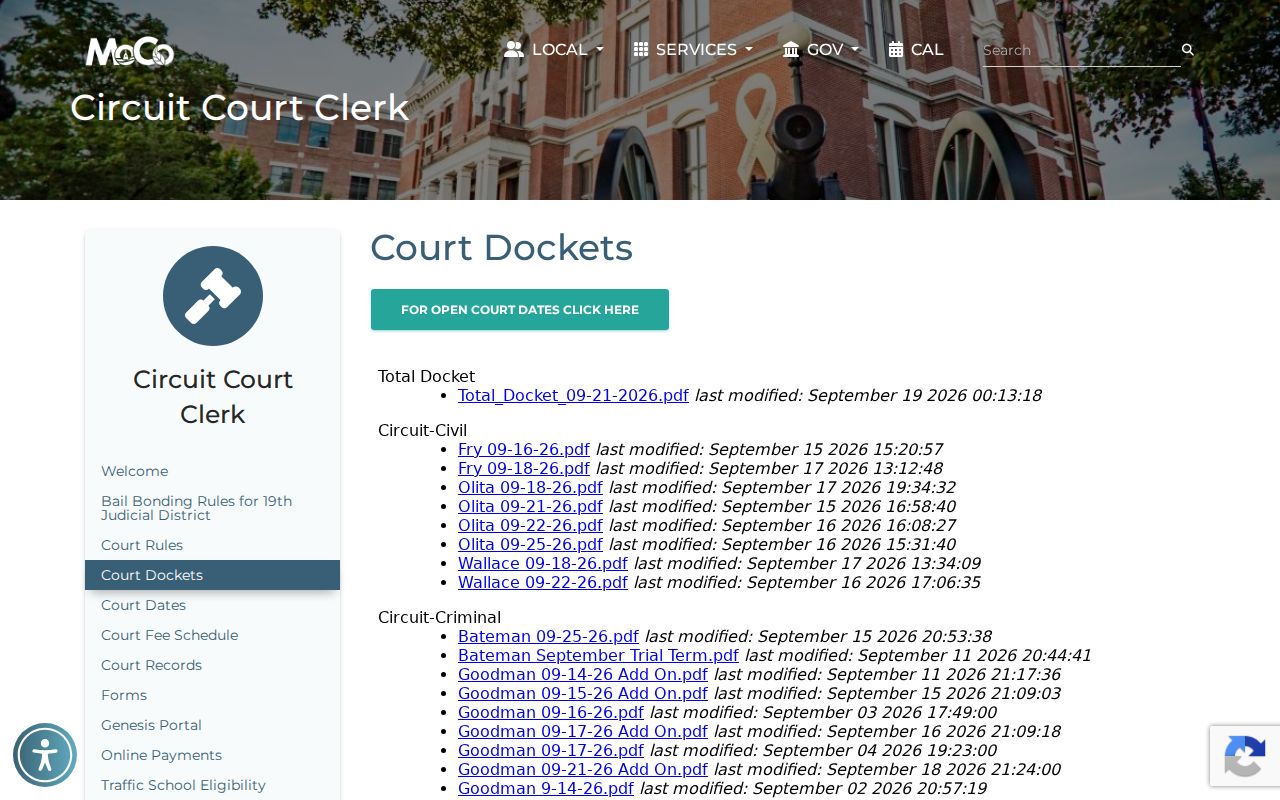
The docket directory can help identify the right court file. The clerk confirms the current order and next setting.
General Sessions and Circuit Criminal files may document a bond motion, probation issue, or later hearing after the original court event. The visible filing title is a clue for the clerk, not a self-executing decision. Ask whether a judge has entered a newer order before relying on an older docket line.
Montgomery County Bench Warrants Explained
Montgomery County does not publish one countywide bench-warrant definition or a separate search for that label. Court-driven warrants may follow a missed appearance, failure to comply, contempt, or probation issue. Clarksville Municipal Court separately warns that missing a date or payment can bring late penalties and FTA or contempt consequences.
A bench warrant is tied to an existing court case. The exact label matters: a docket may instead say FTA, capias, contempt, or probation-violation warrant. The issuing court controls whether a reset, motion, bond hearing, or appearance is needed.
Montgomery County Bench Warrant Docket Days
The county's General Sessions rules, effective January 1, 2026, set daily criminal and traffic sessions. They state that arraignments for people in custody take place by video at 8 a.m. each day and that dockets are posted online. This is calendar context, not a public walk-in warrant docket or a promise that appearing without coordination will clear a case.
For a missed General Sessions date, contact the Circuit Court Clerk at 931-648-5700 and ask which courtroom and docket now control the matter. The county forms and General Sessions page lists local motion and court materials.
The posted calendar helps identify a routine session, but it does not promise that someone with an outstanding order can resolve it by arriving at the courthouse. The research did not identify a warrant-only public docket, walk-in surrender time, or universal recall form. Confirm the case route in advance.
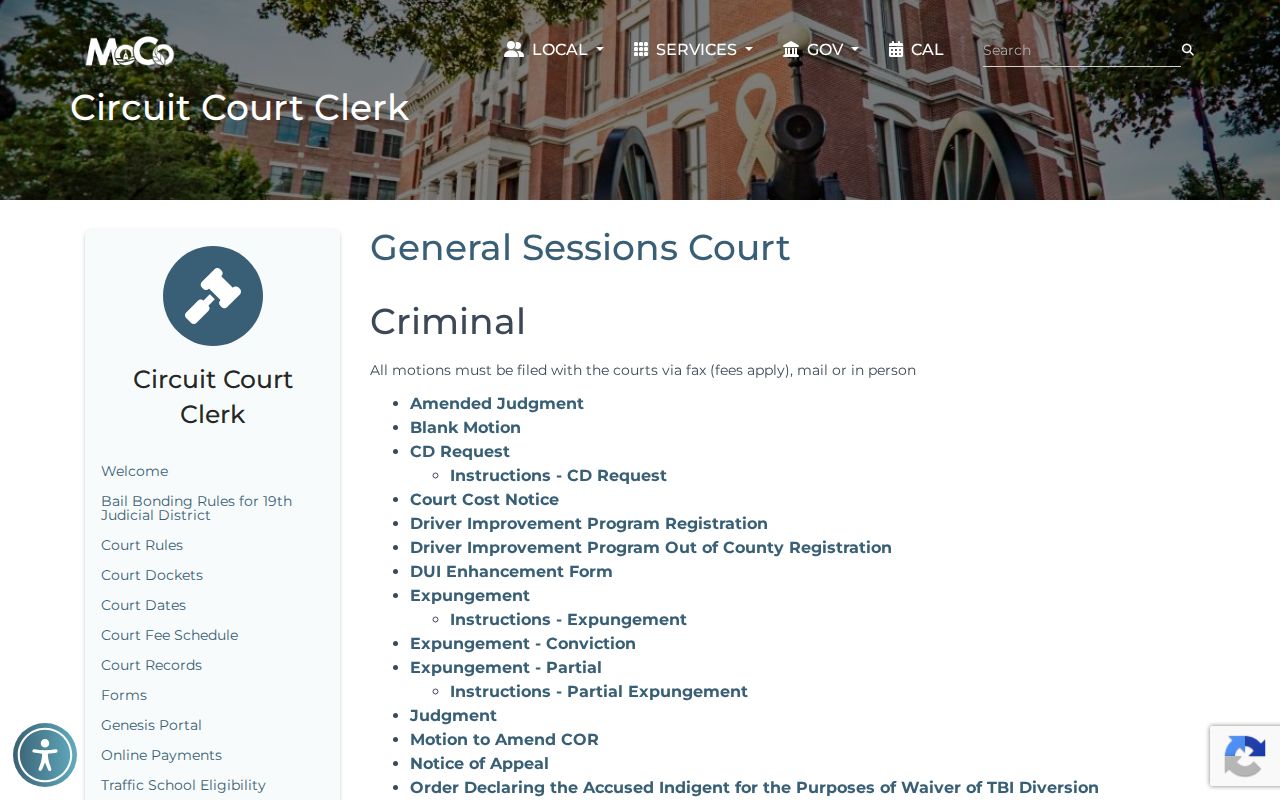
Daily docket posting helps locate a case, but the clerk must confirm whether an outstanding warrant affects attendance.
How Montgomery County Bench Warrants Are Issued
A bench warrant grows out of an existing court matter, unlike an initial arrest warrant that follows probable-cause review on a complaint. A missed setting is one possible trigger, but the docket and order show the actual court action. The issuing judge decides whether the case should be reset, recalled, or heard with a bond condition.
The court handling the case decides whether a missed setting or other event calls for a warrant. The order may direct law enforcement to take the person into custody and bring the case back before the court. The sheriff's database can include adult criminal warrants, but no single public statewide Tennessee warrant search was located.
After issuance, the sheriff may receive and serve the warrant. A court docket can also show a later bond motion or a request for a hold. The order remains a court matter until that court enters a change. A public search result alone cannot tell whether a motion or recall has been granted.
Montgomery County Bench Warrant Court Risk
A common mistake is to assume that going to court automatically makes an old warrant safe to address. The sheriff's Courts Division says deputies can arrest a person who appears in court when an outstanding criminal warrant is found. Ask the Circuit Court Clerk or a lawyer what to expect before attending on another matter.
Likewise, a routine court docket or online search does not show every hold or detainer. Confirm whether the case is county criminal, city traffic, probation-related, or from another jurisdiction. A warrant label and a court date are not interchangeable.
For a missed General Sessions date, the clerk can identify the division and any new setting shown in the file. For a city citation, the Clarksville clerk controls that calendar. Neither office can promise that attending for one matter will prevent service of a separate order.
Bench Warrants and Arrest Warrants Compared
A bench warrant follows a court-controlled event in an existing case. An arrest warrant follows a probable-cause decision on a complaint. Both may lead to arrest, but they start from different records and need confirmation from the court or officer that issued the process. See the arrest warrant process for the county issuance route.
| Feature | Bench Warrant | Arrest Warrant |
|---|---|---|
| Trigger | Missed setting, contempt, or failure to comply. | Probable cause on a complaint or incident report. |
| Who issues it | The judge or court handling the existing case. | Judicial commissioner or court under Tennessee procedure. |
| Underlying case | An existing case or court obligation. | A complaint or charge seeking an arrest. |
| How it changes | Issuing court may reset, recall, quash, or set a hearing. | Issuing authority or court controls the next legal step. |
Montgomery County Bench Warrant Recall Steps
No county page located in the research publishes a bench-warrant recall form, a current walk-in procedure, or one bond schedule. The General Sessions forms page has general motions, but it does not list a warrant-recall template. A court-controlled request may need counsel or a specific motion.
- Use the sheriff search if the matter is an adult county criminal warrant, then call to confirm it.
- Ask the Circuit Court Clerk which court and docket control the case, or call City Court for a Clarksville ticket.
- Confirm whether the court requires a motion, reset, bond hearing, payment, or scheduled appearance.
- After a court order, ask when the sheriff's public search should reflect the change.
Do not rely on old walk-in service counts as permission to appear without calling first.
Resolving a Montgomery County Bench Warrant
Start with confirmation, then follow the issuing court's instruction. A lawyer can review the docket and discuss a motion, reset, bond hearing, or planned appearance. There is no verified local guarantee that a person may walk in and leave the same day.
The Jail FAQ distinguishes a surety bond arranged through a bondsman, cash posted in full, and property documentation handled through the clerk. Its property route calls for two people and separate properties. The 19th Judicial District also publishes bonding-company rules, but neither source supplies one criminal bond amount or a universal warrant-recall process.
- Check the county search and call the Sheriff's Office at 931-648-0611 about a possible adult criminal warrant.
- Call the Circuit Court Clerk at 931-648-5700, or the City Court Clerk at 931-648-4604 for a Clarksville citation.
- Ask the court whether counsel, a motion, a reset, payment, bond, or a scheduled appearance is needed.
- Get confirmation of any recall or new date, then ask when the sheriff record will update.
Caution: Do not assume a bench warrant expires with time. The county reports recalls and removals as court or agency events, not automatic dates.
Montgomery County Bench Warrant Court Routes
A city FTA or contempt issue follows Clarksville Municipal Court's citation process. It is not automatically the same record as a Montgomery County Circuit or General Sessions bench warrant. The City Court warns that missing a date or payment may add late penalties and fees. Ask the City Court Clerk what applies to that citation.
For a county case, the Circuit Court Clerk is the contact for Circuit and General Sessions criminal and traffic business. The county adult search and city case portal cover different records, so a hit or no-hit in one system does not settle the other.
Finding the Court That Issued the Warrant
For an initial probable-cause or process question, the Judicial Commissioner is at 120 Commerce Street on the second floor and lists 931-542-5196. Circuit and General Sessions files are routed through the Circuit Court Clerk. Clarksville cases go to its City Court Clerk; these public offices cannot substitute for one another's court orders.
The issuing court controls a bench warrant's recall or reset. For Circuit and General Sessions criminal or traffic cases, contact the Circuit Court Clerk at 2 Millennium Plaza, Suite 115, Clarksville, or use the county's docket and forms pages. The county Court Center also houses Juvenile and Chancery Court, but their records and authority differ.
For a Clarksville municipal matter, call the City Court Clerk, not the county clerk or judge. The sheriff can confirm its service record, but it cannot decide whether the court will recall an order. Tennessee's clerk locator points warrant questions to the clerk for the county where the case originated.
The 19th Judicial District bail rules describe approved bonding-company procedure, not a public warrant-recall process.
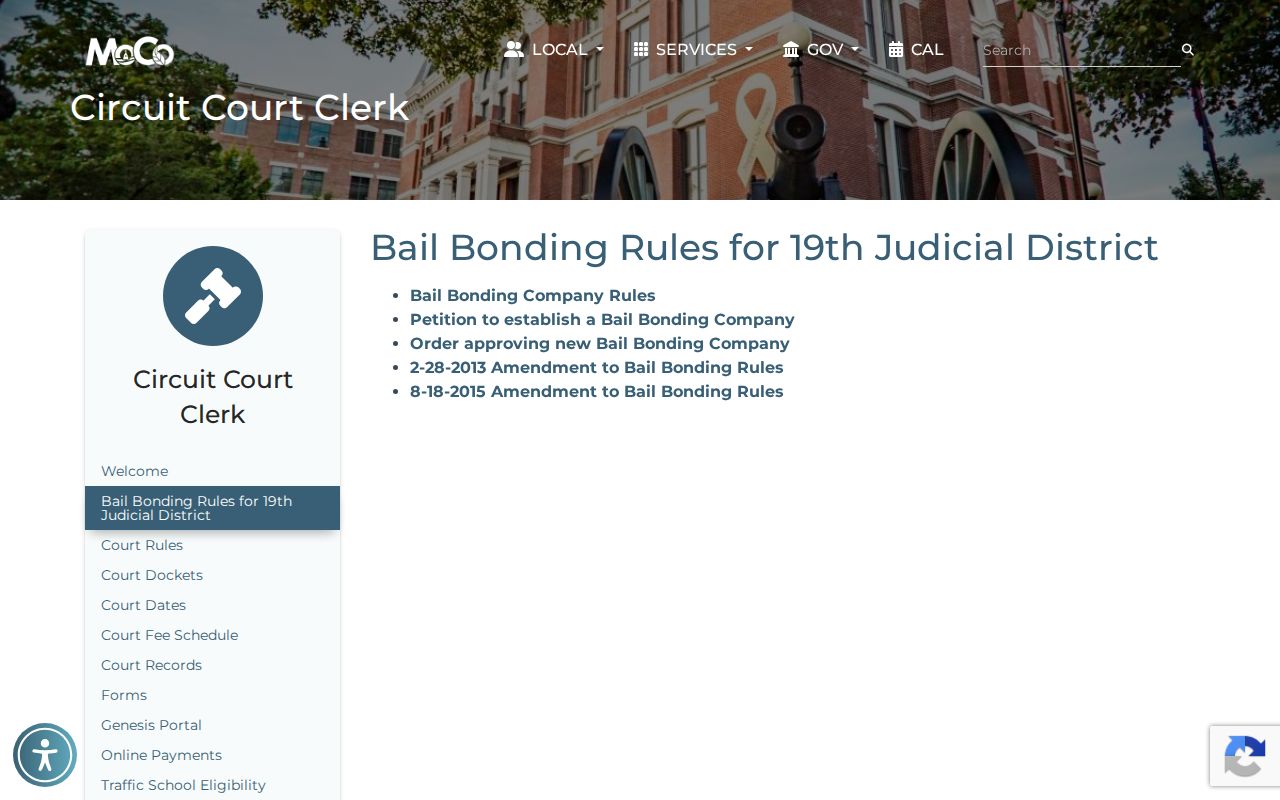
These local rules concern bonding-company practice. They do not establish a universal bond amount or authorize a walk-in warrant recall.